

The AGI Post feed

Feed

Reset

92 shown / 92 total

featurearticle

Anthropic's Claude Fable 5 Launch Turns Mythos-Class AI Into A Controlled-Access Product

Anthropic is trying to do two things at once with Claude Fable 5. It is giving regular Claude and API users access to a new Mythos-class model, which Anthropic describes as more capable than any Claude model it has previously made generally available. It is also putting that model behind automated safety rules, fallback behavior, trusted-access programs, and retention policies.

Anthropicfeature
publicationpublication

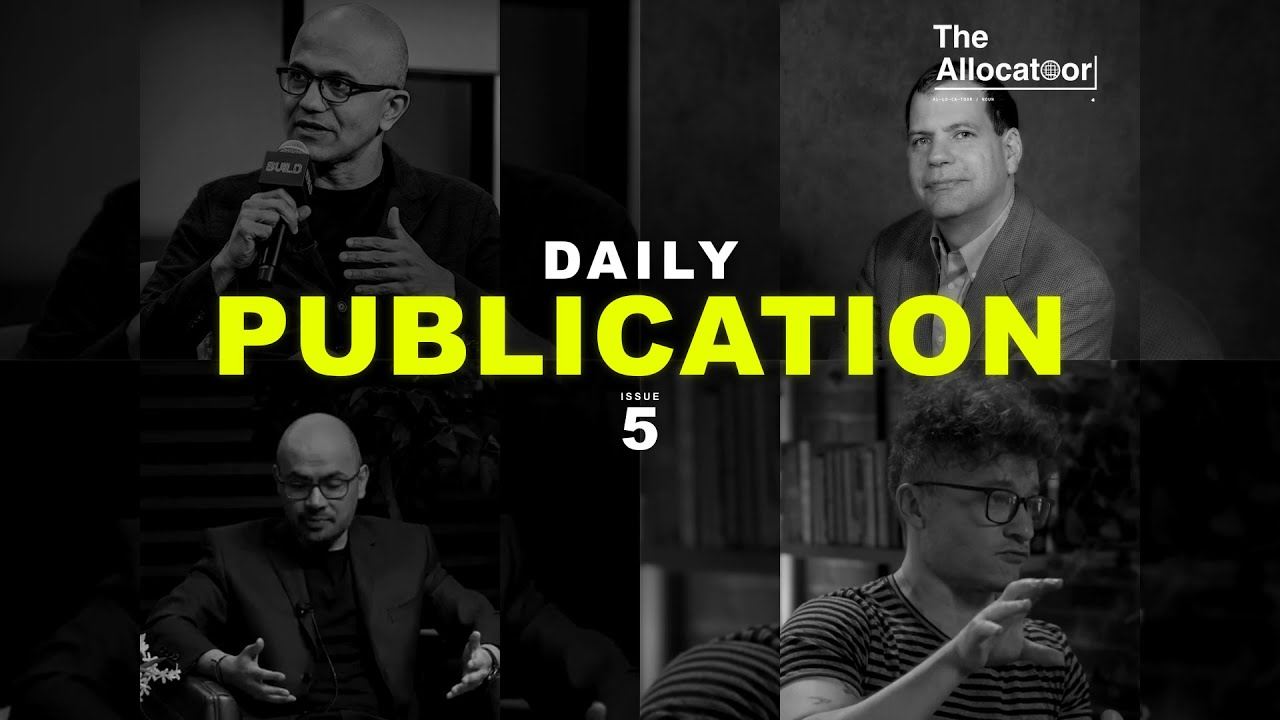
Allocatoor Daily Issue #5, June 9, 2026

This issue covers four linked feature recaps: Satya Nadella on enterprise AI harnesses, Tyler Cowen on initiative as the deployment bottleneck, Demis Hassabis on the AI decision window, and Alex Imas with Philip Trammell on who owns the upside if AI shifts returns toward scarce assets. It compresses about 3 hours and 13 minutes of primary source video into a 14 minute daily review.

The AGI Postpublication
featureyoutube video feature

Demis Hassabis On The AI Decision Window

Demis Hassabis says AGI may be close enough that the next few years are a decision window. AlphaFold shows a concrete version of AI serving science, while his comments on public concern and regulation show why governance, benefit-sharing, safety, and human agency cannot wait.

featureyoutube video feature

How AI Makes Initiative Beat Intelligence

Tyler Cowen argues that AI rewards initiative more than static intelligence: the winners are people and institutions that can turn AI into experiments, data, workflow redesign, and action before slow systems catch up.

Sanafeature
featureyoutube video feature

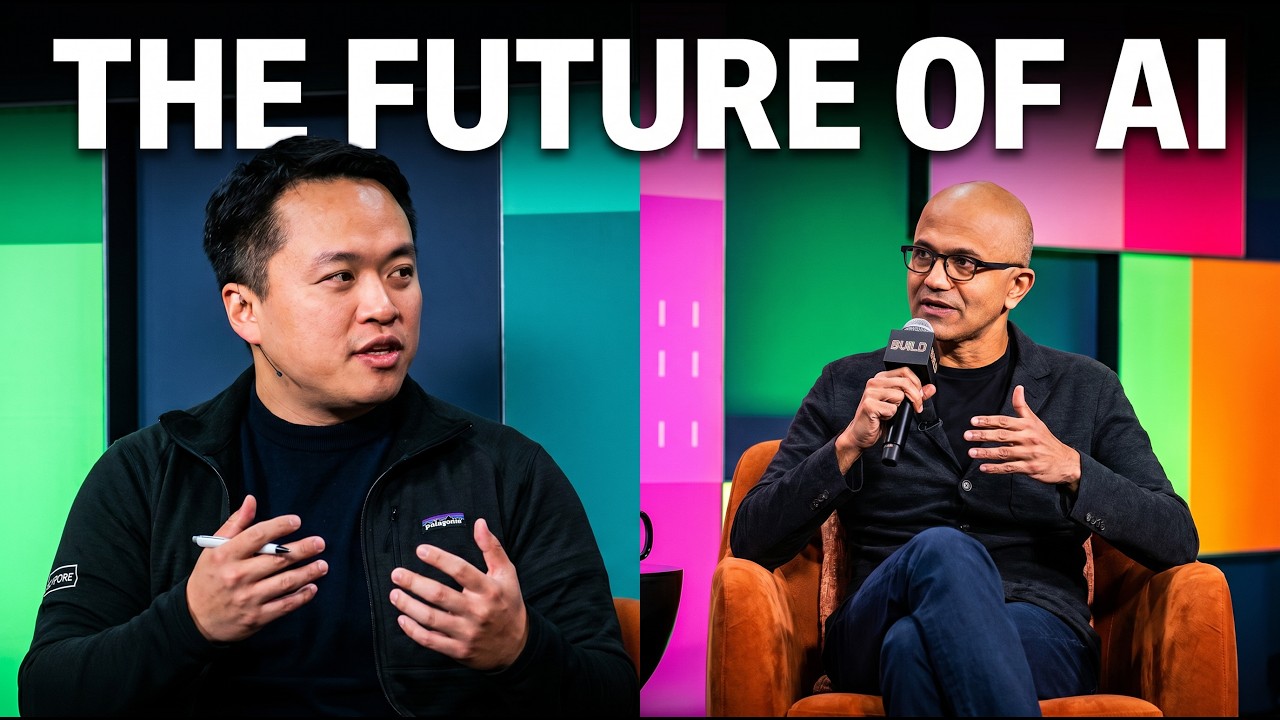
Satya Nadella on Microsoft's AI Harness Race

Satya Nadella is explaining Microsoft's Build 2026 AI strategy to Latent Space and No Priors. Enterprise AI value moves into the harness around agents: the operating layer that gives agents company data, tools, context, evals, permissions, interfaces, traces, and human review. Coding agents make the problem obvious. Once a developer or manager has many agents producing work, chat becomes too thin. The company needs a work surface for assigning, inspecting, approving, and improving agent work. Nadella extends that pattern to the whole enterprise: private evals can test whether agents help with company-specific work, traces can show how good work happens, and the harness can improve the system over time. Microsoft wants Foundry, GitHub Copilot, Microsoft 365, Microsoft IQ, and Azure to supply that harness. Customers may own their private evals, traces, and context, but Microsoft is building the platform where those assets become useful.

resource
resourceyoutube video

The better AI gets, the smaller its share of the economy might get - Alex Imas and Phil Trammell

Dwarkesh Patel interview with Alex Imas and Phil Trammell on whether increasingly capable AI could command a smaller share of the economy, including capital share, redistribution, demand, machine-economy integration, wealth accumulation motives, and developing-country strategy.

Dwarkesh Patel and Dwarkesh PodcastAllocatoor Daily Issue #5, June 9, 2026featureAI economics, capital share, labor displacement, redistribution, developing countries
resource
resourceyoutube video feature

Satya Nadella on AI: @NoPriorsPodcast x Latent Space Crossover Special at Microsoft Build 2026

Brad-directed standalone feature source: Satya Nadella discusses AI platforms, Microsoft model strategy, SaaS durability, enterprise harnesses, engineering roles, data centers, education, and societal impact in a Latent Space / No Priors crossover at Microsoft Build 2026.

Latent.SpaceAllocatoor Daily Issue #5, June 9, 2026featureAI platforms, enterprise software, developer ecosystems, compute infrastructure, labor and education
publicationpublication

Can Models Prove Their Own Work?

Models are making it cheaper to generate more attempts: faster kernels, possible protein binders, new data-center demand, and software output from coding agents. The harder question is whether models can prove their own work, or where tests, labs, buyers, infrastructure, and human judgment still have to decide what is real.

The AGI Postpublication
publicationpublication

AI’s New Cost Curve

AI is shifting scarcity from raw capability to the costs around it: inference budgets, chip data movement, reliable evaluation, durable memory, human supervision, capital substitution for labor, and weak-link institutions. This issue maps where leverage moves once models become useful enough that the hard question is no longer only what they can do, but who can allocate the remaining compute, trust, context, labor, power, and access.

The AGI Postpublication
publicationpublication

Who owns the bottleneck?

AI is moving from model competition into an allocation stack: compute, wafers, power, deployment capacity, inference speed, trusted workflows, distribution surfaces, and capital markets.

The AGI Postpublication
resource
resourcearticle

Pope Leo XIV encyclical Magnifica Humanitas on safeguarding the human person in the time of artificial intelligence

Pope Leo XIV frames AI as a civilizational governance problem: technology is not neutral, private actors hold unusual power, and human dignity, work, truth, freedom, and the common good should discipline how AI capacity is built and allocated.

The Holy SeeAI’s New Cost CurvesupportingAI governance, human dignity, labor, public oversight, technology power allocation