

Who owns the bottleneck?
The Brief
AI is moving from model competition into an allocation stack: compute, wafers, power, deployment capacity, inference speed, trusted workflows, distribution surfaces, and capital markets.
Features
TSMC Is The Governor On The AI Bubble

Baker's sharpest point is that AI demand may be real and still become a bubble if supply is allowed to run too far ahead. In his view, TSMC's wafer discipline is the hidden governor: it keeps Nvidia scarcity valuable, slows reckless overbuild, and forces every frontier model, chip startup, hyperscaler, and application company to compete for constrained compute. Baker is saying AI is not mainly limited by ideas right now. It is limited by the physical system that makes and powers the computers: chips, wafer capacity, data centers, energy, financing, and time. If too many chips and data centers get built too quickly, the industry can create a bubble. If too few get built, AI companies cannot meet demand. TSMC matters because it controls much of the advanced chip supply, so its capacity decisions decide how fast the whole AI market can grow. This is one of the cleanest allocation-economy sources in the Genesis set. Baker's argument turns AI from a software story into a capacity-allocation system: TSMC allocates wafers, Nvidia allocates scarce accelerators, frontier labs allocate tokens, data-center builders allocate power and permits, creditors allocate against GPU useful life, and startups fight to be close enough to token flow to capture value. The issue is not whether AI demand exists; it is who controls the bottlenecks that decide how much intelligence can actually be delivered.
TSMC capacity decisions become a better AI-market signal than many model launches, because they shape whether scarcity persists or overbuild begins.
Nvidia's power comes from being the main seller of shortage; that remains valuable while wafers, memory, power, optics, and deployment capacity are constrained.
Frontier labs gain leverage when pricing shifts from flat subscriptions to usage-based token plans, because heavy users reveal true demand instead of being rate-limited.
Railway Shows The Agent-Native Cloud Is A Trust And Capacity Layer
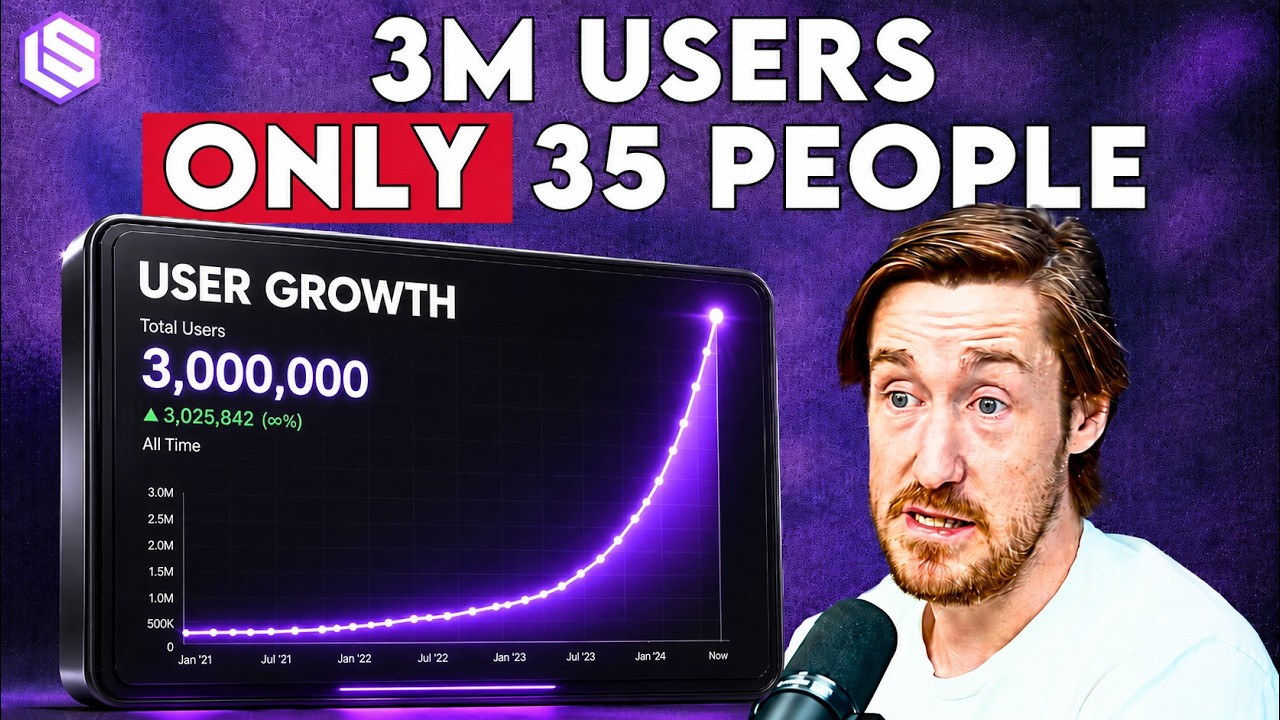
Jake Cooper's most useful point is that agentic software does not remove infrastructure work. It multiplies it. Once many agents can change software in parallel, the scarce inputs become compute, safe production forks, rollout controls, observability, and trust that automated changes will not break real systems. Railway is saying AI agents can write or change software quickly, but they still need somewhere safe to run it. If one human developer makes a change, normal testing may be enough. If many agents make many changes at once, the platform needs copies of production, safe rollouts, logs, feature flags, and enough compute so everything can be tested without waiting. Railway is directly about allocating compute, trust, and operational risk. Cooper's argument turns deployment into an allocation problem: the platform has to decide when to use owned servers versus cloud bursting, how to amortize hardware, how to expose storage/network/compute to agents, and how much blast radius automated work is allowed. That makes cloud infrastructure a control plane for AI labor.
The cloud platform winner may be the one that exposes infrastructure as agent-operable handles without making production unsafe.
Bare-metal ownership is strategic because agent workloads can turn hyperscaler rental costs into margin pressure.
Feature flags, copied databases, PII transforms, shadow traffic, and rollback systems become core AI infrastructure, not developer-experience extras.
Cerebras Turns Fast Inference Into A Capital Allocation Story

Andrew Feldman's most important claim is that AI demand has moved from "can the model work?" to "can the model respond fast enough to be useful?" Cerebras is therefore not only a chip story. It is a bet that inference speed, cloud access, manufacturing scale, and public-market credibility become scarce allocation points. Cerebras built a very large chip designed for AI. Feldman's point is that when people use AI all day, waiting for answers becomes expensive and frustrating. If Cerebras can make models answer much faster, customers may pay for that speed. But making the chips and deploying them is hard because it needs factories, power, software, money, and large customers. Cerebras is a useful counterweight to NVIDIA because it asks whether the allocation economy can route around the dominant GPU path. Feldman's story says inference demand is pulling capital toward alternative architectures, but the bottlenecks are still physical: manufacturing, power, buildings, testing, networking, compilers, and customer commitments. The allocation question is who controls fast output tokens, not only who trains the next model.
Inference speed may become a separately priced scarce input, not just a benchmark footnote.
AWS's Cerebras collaboration suggests hyperscalers may blend proprietary chips and specialist accelerators rather than rely on a single compute path.
Going public can be a strategic operating move for AI hardware because customers need audited books, lower financing costs, and long-term supplier confidence.
TBPN Maps The Surfaces Where AI Work Gets Allocated

The TBPN episode is most useful as a connective-tissue source: it shows AI competition moving away from pure model rankings and into surfaces, workflows, security, capital markets, and data access. The sharpest read is that whoever controls the daily interface controls where AI work is routed. This episode is about where AI shows up in real life. It might be glasses, Gmail, design tools, coding tools, security software, banking tools, or GPUs. The important question is not only which model is smartest. It is who owns the places where people and companies already do their work. TBPN is a map of allocation surfaces. Google wants to allocate attention and tasks through Gemini, Workspace, Maps, YouTube, and eyewear. Figma wants to allocate design work through file-aware agents. Socket wants to allocate trust and security review across AI-generated code and third-party dependencies. Mercury wants to allocate finance operations through agent-readable banking context. NVIDIA and SpaceX discussions move the same theme into compute and capital markets.
AI distribution is becoming a surface war: eyewear, documents, inboxes, maps, IDEs, design files, and banking workflows are all possible front doors.
Google has major data and product-surface advantages, but developer trust and coding-agent momentum may be weaker than its consumer ecosystem.
Security becomes a growth market when AI coding increases dependency volume, generated code, and open-source attack surface.
Supplementary Resources
Retained same-date feed resources that support the issue, linked directly to the original sources.