

State of Enterprise AI 2026 With Aaron Levie
"I see most things as a data problem ... data with associated things like access controls and like how well defined is the workflow."
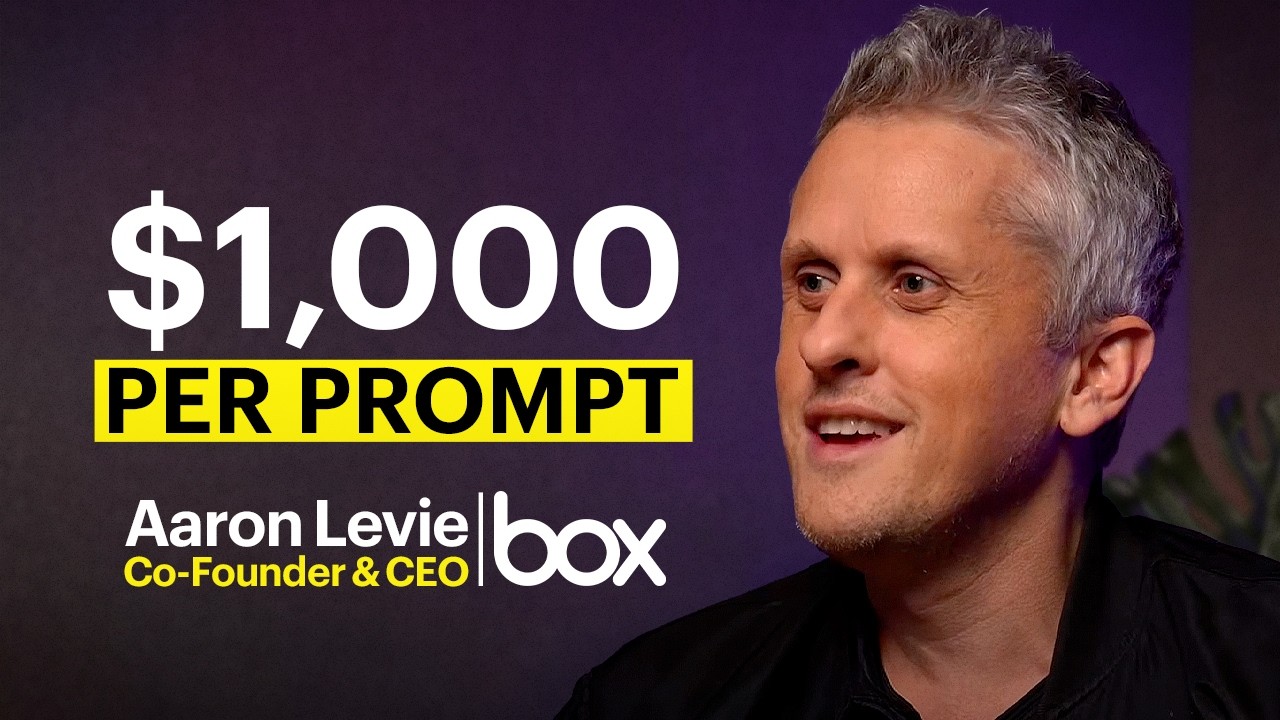


Source Moment
The source clip shows Levie answering where enterprises should start: data, permissions, and workflow context. An agent may fail because it has too little information, create risk because it has too much access, or produce weak output because the business context is wrong.
Context
Aaron Levie is Box's co-founder and CEO. Box sells content management, security, collaboration, and AI workflow products to large enterprises. The source is a MAD Podcast episode with Matt Turck. The episode covers enterprise AI adoption, token costs, headless software, forward-deployed roles, and job impact. Box announced Box Agent in 2026 as an AI product for enterprise content, permissions, and workflow use.
Big Ideas
- Enterprise AI now requires explicit allocation of tokens, model class, data access, workflow ownership, and human review. The labor thesis should remain open: Levie is a well-positioned enterprise witness, but his optimistic jobs view is still a forecast.
Full Recap
- 00:00-05:35 - : Enterprise implementation lags model progress, especially outside engineering.
- 05:35-12:40 - : CIOs are optimistic, but token-heavy agent use is becoming a real budget problem.
- 12:40-21:05 - : AI spend moves from IT into business-team budgets, creating a need for model routing and ROI measurement.
- 21:05-29:30 - : Coding agents do not transfer cleanly to every department because non-engineering work has messier context and permissions.
- 29:30-41:00 - : Data, access control, workflow design, and change management become the deployment work.
- 41:00-56:00 - : Headless software pressures pure seat pricing without making software value disappear.
- 56:00-72:56 - : Levie argues for job transformation more than job deletion, but that labor outcome remains provisional.
Technical Need To Knows
- Token: A unit of text or code processed by a model; agent runs can turn token use into a budget issue.
- Inference: The compute spent when a model responds or acts.
- Model routing: Sending each task to the model that fits cost, speed, and capability.
- Forward-deployed engineer: A technical implementer who wires agents into real workflows.
- Access controls: Rules for which systems or files an agent can use.
- Headless software: Software used through APIs or background workflows instead of a human interface.